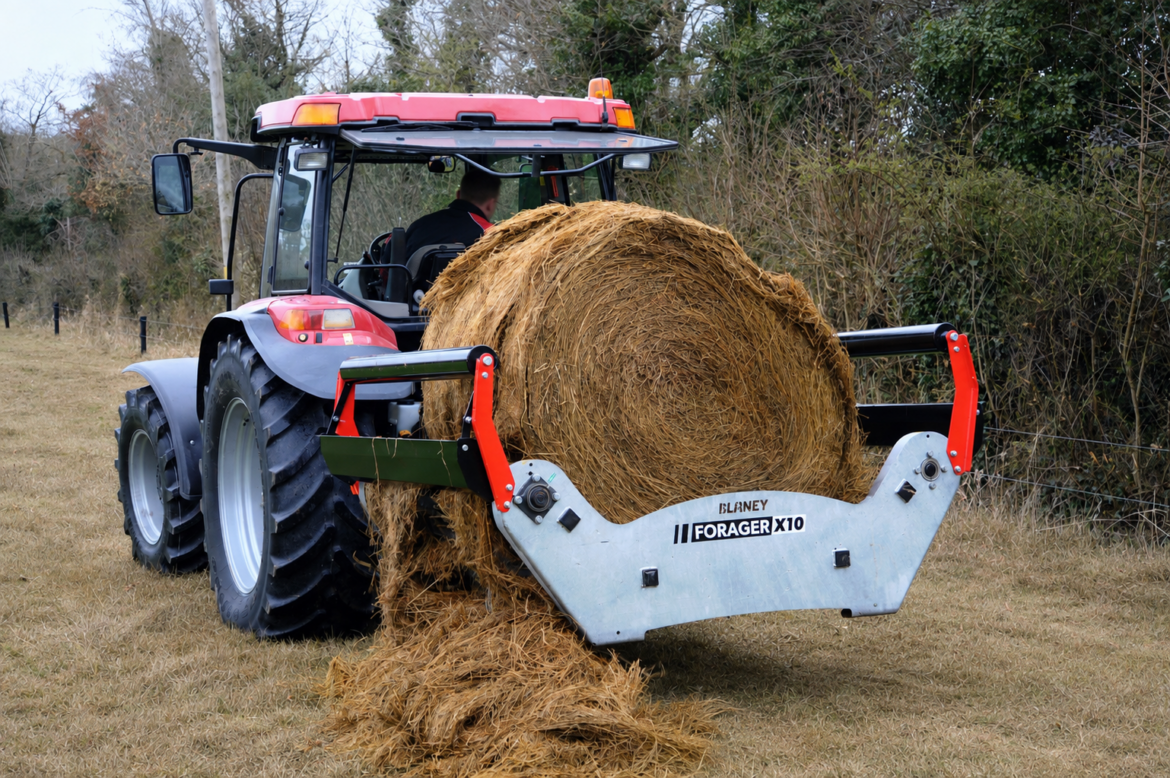
As conserved forage is opened earlier than planned, Blaney Agri urges farmers to protect valuable winter stocks by feeding only what livestock require. Prolonged dry conditions and restricted grass growth are forcing livestock farmers in parts of Ireland to begin supplementary feeding earlier than anticipated, adding further pressure to winter forage reserves that are already below target on many farms.
Recent PastureBase Ireland figures showed average grass growth across Ireland at 31kg DM/ha, compared with demand of 35kg DM/ha. The national average disguised substantial regional variation, with growth falling as low as 8kg DM/ha in parts of the South-East and some farms moving to full silage and concentrate diets because grazing supplies had been exhausted.
The latest Teagasc Fodder Survey provides a wider indication of the challenge ahead. Only 42% of the dairy and drystock farms surveyed were on target or carrying surplus winter feed. A further 27% had deficits of less than 10%, while 31% were at risk of more significant shortages.
The position was most severe in the South-East, where 40% of participating farms reported winter fodder deficits of more than 10%. Teagasc also reported heavier supplementary feeding during July and August because of the lack of grass during the drought.
The immediate priority for affected farms is to maintain livestock performance and protect grazing covers. However, opening winter silage earlier than planned creates another important question: how can that conserved forage be distributed without creating unnecessary waste?
For Blaney Agri, the answer is not simply to feed more silage. It is to retain control over how much forage is fed, where it is placed and how easily livestock can access it.
The machine selected to do that job also matters. A basic bale unroller may move forage from the bale to the ground, but loading quickly, controlling the discharge and feeding consistently as the bale changes shape require a machine engineered around the complete feeding process.
Placing a complete bale in a field may be quick, but it gives the farmer limited control over distribution. Livestock can pull forage from the bale faster than they consume it, walk it into the ground or contaminate it with soil and dung. The problem becomes more costly when bales intended for winter housing are being used to bridge a summer grass deficit.
Controlled unrolling allows forage to be placed in a long, consistent swath suited to the number of animals and the available feeding space. It also allows one bale to be divided between paddocks, groups of livestock or separate feeding periods, helping the operator provide the quantity required while retaining the remainder for later use.
Not every bale feeder delivers the same degree of control. Blaney’s machines have been developed to do more than simply turn a bale. They are designed to make loading quicker and easier, retain control as the bale changes shape and allow the operator to regulate where and how quickly forage is discharged.
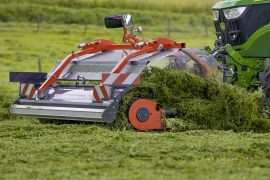
The Blaney Forager X10 is the company’s round-bale feeding solution, developed specifically to handle the wet, heavy, tightly packed, saggy and misshapen bales that can challenge conventional bale unrollers. It claims to combine faster, easier loading with the company’s most advanced bale-retention and feed-out technology, helping one operator complete the entire job with less interruption and considerably less physical handling.
A round bale becomes less stable as it is fed. Its diameter reduces, its structure loosens and, in wet silage, the remaining material can sag or collapse. If the machine cannot retain and rotate the changing bale effectively, it may discharge large lumps, stop feeding consistently or require the operator to interrupt the job.
The Forager X10 claims to address this through a combination of heavy-duty frame construction, reinforced crossbars, side rollers and Blaney’s specialist feed-out and bale-retention systems. These features keep the bale securely contained and rotating as its weight, shape and consistency change.